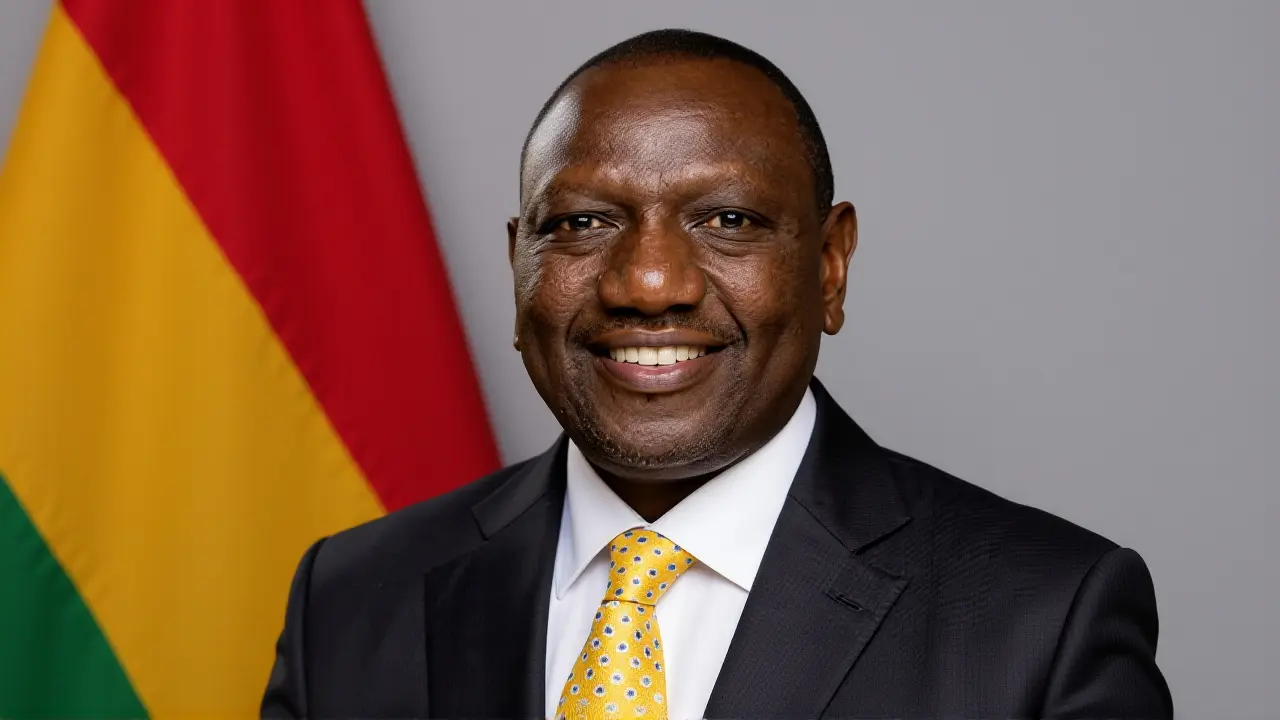
The African Union has officially entered a period of mourning following the death of Dr. Edgar Chagwa Lungu, former President of Zambia. In a formal statement released on June 10, 2025, the continental body expressed profound sorrow over the loss of the leader, emphasizing his contributions to the regional political landscape. While the announcement confirms his passing, it leaves a void of specific details regarding the cause and exact timing of his death, sparking a wave of tributes across Southern Africa.
Here's the thing: the loss of a former head of state is never just a national affair in Africa; it's a diplomatic event. The AU's reaction serves as a formal acknowledgement of Lungu's role in steering one of the continent's most stable democracies through turbulent economic waters. For many, the news comes as a shock, though the details surrounding his final days remain frustratingly thin. (As is often the case with high-profile passings, the official narrative usually takes a few days to fully emerge).
The Official Response from Addis Ababa
The mourning process was spearheaded by H.E. Mahmoud Ali Youssouf, Chairperson of the African Union Commission. Youssouf has made it a point of his tenure to maintain a strict protocol of honoring departed African statesmen, viewing these tributes as a way to preserve the collective memory of the continent's governance.
According to the AU Commission, the statement issued on June 10 isn't just a formality. It's part of a broader institutional commitment to honor the legacies of those who have served in the highest offices of power. The Chairperson's office noted that Dr. Lungu's tenure was marked by efforts to navigate the complexities of Zambian sovereignty and regional integration. Turns out, the AU sees these moments as critical for maintaining a sense of unity among the 55 member states.
The formal condolences were shared across the organization's official channels, echoing a sentiment of "profound sorrow." However, the brevity of the announcement has left many questions unanswered. There was no mention of whether the former president passed away in Lusaka or abroad, nor was there any mention of his age or medical history leading up to the event.
Examining the Legacy of Edgar Lungu
To understand why this matters, we have to look at the man himself. Edgar Lungu's presidency was a rollercoaster of infrastructure development and intense political scrutiny. He took office during a period of transition and worked to balance the needs of a growing urban population with the rural heartlands of Zambia. His time in power was characterized by a drive for economic diversification, though it wasn't without its critics.
Interestingly, Lungu's transition from the presidency to a retired statesman was a pivotal moment for Zambian democracy. The peaceful handover of power is a benchmark that the AU often highlights as a success story for the region. By mourning him, the AU isn't just honoring a man, but the process of democratic transition in Southern Africa.
Key pillars of his influence included:
- Expansion of road and energy infrastructure across the Zambian plateau.
- Engagement with the Southern African Development Community (SADC) to stabilize regional trade.
- Navigating the volatile copper markets, which are the lifeblood of the Zambian economy.
- Maintaining a complex relationship with international lenders during debt restructuring.
Regional Impact and Global Reactions
The ripple effects of this news are already being felt in neighboring countries. From Harare to Gaborone, political figures are beginning to issue their own statements. The death of a former leader often triggers a period of reflection on the policies that defined an era. In this case, Lungu's approach to governance will likely be the center of discussion for weeks to come.
Analysts suggest that the AU's quick response is designed to signal stability. When a prominent figure passes, the international community looks for signs of political volatility. By framing the passing within a structured, formal mourning process, the AU Commission is effectively neutralizing any potential for instability.
But wait, there's a diplomatic layer here. The AU's ability to coordinate these tributes across borders reinforces the organization's role as the "voice of Africa." It transforms a national tragedy into a continental moment of solidarity, ensuring that the legacy of the deceased is framed within the context of Pan-Africanism.
What Happens Next?
The world is now waiting for the Zambian government to provide a more detailed account. We expect a formal announcement regarding the state funeral arrangements, which usually involve a high-level delegation from the AU and various heads of state. The specific date of the burial and the location of the lying-in-state will be the next major milestones in this timeline.
There is also the question of the "final report" on his health. Given the lack of specifics in the June 10 statement, the public and the press are eager to know if the passing was sudden or the result of a prolonged illness. Until the family or the state releases a medical bulletin, speculation will likely persist in the media.
Historical Context of AU Condolences
The practice of issuing formal mourning statements is deeply embedded in the AU's diplomatic culture. It isn't just about the individual; it's about the office. Whether it's a former president from the West African coast or the Horn of Africa, the AU Commission ensures that the transition from power to history is marked with dignity.
This tradition helps build a historical archive of leadership. By documenting these passings, the AU creates a lineage of governance. In the case of Dr. Lungu, his inclusion in this registry ensures that his contributions—and his controversies—are etched into the institutional memory of the continent. It's a way of saying that no matter how a leader's term ended, their service to the state remains a part of the larger African story.
When did the African Union announce the passing of Edgar Lungu?
The African Union officially shared its mourning statement on June 10, 2025. The announcement was issued by the AU Commission to honor the former President of Zambia's contributions to the continent.
Who is the current Chairperson of the AU Commission overseeing these tributes?
The process is led by H.E. Mahmoud Ali Youssouf. He has established a consistent practice of issuing formal condolences for the deaths of former African heads of state and other distinguished figures to preserve their legacies.
What details about Dr. Lungu's death are currently missing?
As of the June 10 statement, specific details such as the exact date of death, the cause of death, his age at the time of passing, and immediate family details have not been publicly disclosed by the AU.
Why does the African Union issue official statements for former leaders?
These statements reflect the AU's commitment to honoring the legacies of individuals who have served Africa. It serves a diplomatic purpose by fostering continental unity and acknowledging the role of former heads of state in regional stability.
What was Dr. Edgar Lungu's role in Zambia?
Dr. Edgar Lungu served as the President of Zambia, where he focused on infrastructure development and economic diversification. His tenure is remembered for both its developmental goals and the political challenges associated with his leadership.



Gary Clement
April 25, 2026 AT 17:25the copper market volatility definitely played a huge part in his term and it's a classic case of resource dependency affecting governance
Anil Kapoor
April 27, 2026 AT 01:40Calling a peaceful handover a benchmark is a massive stretch when you look at the actual political climate during those years. The AU loves to polish the image of these leaders to maintain a facade of continental stability regardless of the domestic reality. It's purely performative diplomacy.
nikolai kingsley
April 28, 2026 AT 03:33honestly some people just dont care about the truth as long as they have power’s legacy is just a lie told by winners
Aaron X
April 29, 2026 AT 13:13The institutionalization of mourning within the AU framework functions as a socio-political heuristic to mitigate volatility. By leveraging this collective ritual, they create a paradigm of continuity that transcends the individual's specific administrative shortcomings or successes. It's essentially a mechanism for maintaining the hegemony of the state through the sacralization of the former executive office, ensuring that the transition from political agency to historical artifact remains controlled and sanitized for the benefit of regional stability.
Antony Bachtiar
April 30, 2026 AT 22:48Lungu was barely a stability guy... totaly overblown by the AU just to look good on paper
Dianna Knight
May 1, 2026 AT 09:05It's so important to recognize the systemic intricacies of these diplomatic gestures! 🌟 I think the Pan-Africanism mentioned here is a great way to foster regional synergy and empathy across borders. Let's hope for a smooth transition for the family and the nation during this time of grief. Sending love to Zambia! ❤️
Beth Elwood
May 2, 2026 AT 08:14The lack of medical details is typical for these high-profile cases 🧐 Just wait a few weeks and the full story will leak 📉
Josh Raine
May 4, 2026 AT 05:21Why is the AU so obsessed with these formal rituals while people are still struggling in the streets? 😡 It's just a bunch of old men in suits pretending to care about legacy while ignoring the systemic failures of the leaders they are mourning! This whole thing is a joke and a distraction from actual progress! 🙄
Shelley Brinkley
May 5, 2026 AT 14:21lol imagine thinkng the AU actually care about a single person... its all just fake poltics and ppl fallin for it
Angie Khupe
May 5, 2026 AT 18:42I hope everyone can find a way to remember the good parts of his leadership and move forward in peace 😊
Pradeep Maurya
May 6, 2026 AT 09:07The sheer magnitude of the infrastructure projects he undertook cannot be dismissed lightly because it provided the very arteries through which the Zambian economy breathes, and while critics may point to the debt, one must realize that without those roads and energy grids, the regional trade within SADC would have remained stagnant for another decade, making his legacy one of tangible growth despite the financial complexities involved in the process!
megha iyer
May 7, 2026 AT 11:37This is all just too much drama for one man.
Mel Alm
May 9, 2026 AT 11:36its sad when a leader pasess away like this
Paul Smith
May 11, 2026 AT 06:51We should all see this as a moment to reflect on how we can build more stable leadership roles in our own regions because when we look at the broad strokes of African governance, the transition of power is always the most critical part and if we can learn from the Zambian experience, we can help many other nations find their own path toward peace and growth for the next generation of leaders!
Santosh Sharma
May 11, 2026 AT 20:18Glad to see the AU stepping in quickly for the family
ANISHA SRINIVAS
May 12, 2026 AT 23:31Totally agree with the point about the democratic transition! It's such a win for the region 🌟 Hopefully the funeral details come out soon so we can pay respects properly!
priyanka rajapurkar
May 13, 2026 AT 23:27Oh sure, because a few formal statements from Addis Ababa magically fix the economic mess left behind. Truly inspiring stuff.
Mason Interactive
May 14, 2026 AT 16:55It's wild how different the international perspective is compared to the local one. In the US we barely hear about these transitions until the AU makes a big deal out of it, but for the people in Lusaka, this is a massive shift in their political history. I've always found the way Africa handles these diplomatic milestones to be way more structured than our own chaotic political cycles. It's a different vibe entirely, focusing on the office rather than just the individual person, which is kind of a fascinating cultural approach to leadership and death.
Alex Green international
May 16, 2026 AT 10:27It is my hope that the transition remains peaceful. The stability of the region is paramount and I trust the current leadership will handle this with the utmost dignity and grace for all involved