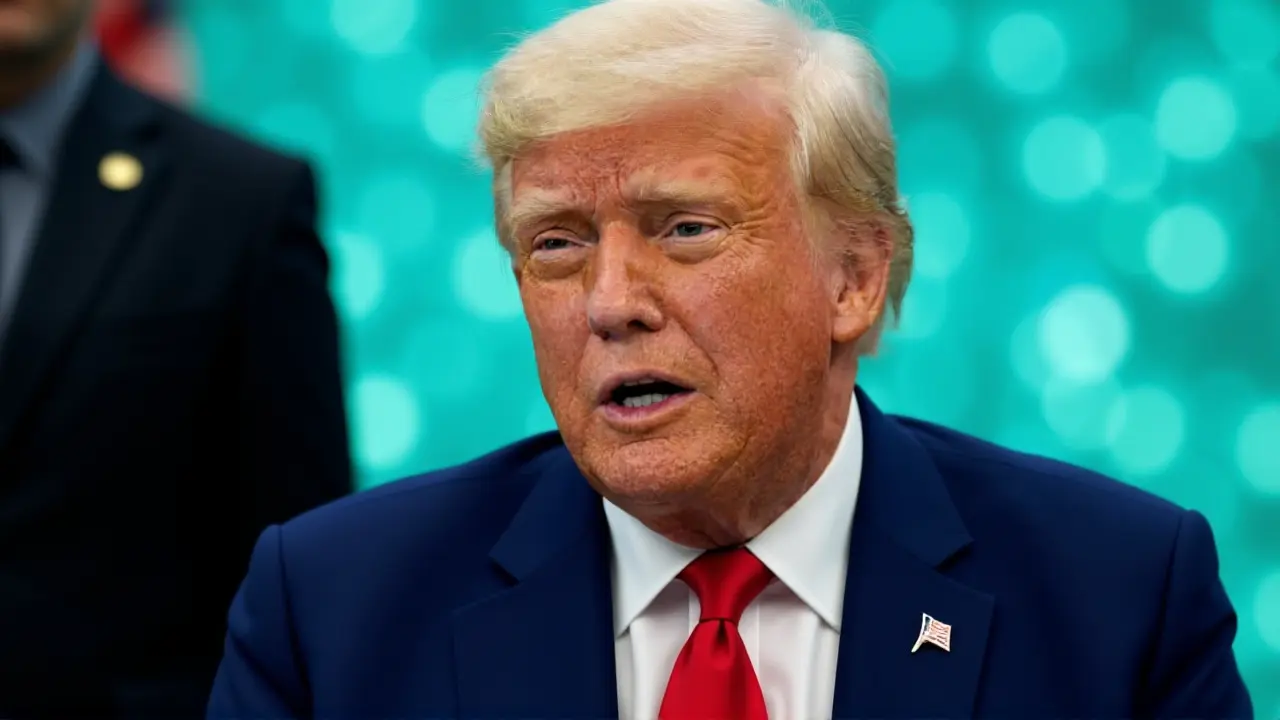
When Donald J. Trump touched down in Riyadh on May 13, 2025, he didn’t come to ask for favors—he came to collect. In his first major overseas trip of his second term, the 47th president locked down more than $2 trillion in investment pledges from three Gulf nations, turning diplomacy into a high-stakes business negotiation. The trip, which spanned Riyadh, Doha, and Abu Dhabi, was less a state visit and more a corporate roadshow, complete with Elon Musk as senior advisor and a delegation of Fortune 500 CEOs. And yet, for all the fanfare, the trip left behind a trail of unanswered questions: Why no Israel? Are these deals real—or just press releases dressed as policy?
A New Kind of Diplomacy
Trump’s approach to foreign policy has always been transactional. But this trip took it to another level. In Riyadh, he demanded Saudi Arabia raise its U.S. investment commitment from $600 billion to $1 trillion—an amount roughly equal to the kingdom’s entire annual GDP. The response? A $600 billion package, including a $142 billion defense deal described as “the largest in history.” No king appeared. Crown Prince Mohammed bin Salman stood alone on the dais, a clear signal that he now runs Saudi Arabia. King Salman, long a fixture in public life, has vanished from view since 2023, and Trump’s decision to meet only with the crown prince underscored the shift in power.
On the flight over, Trump gave an interview to Sean Hannity aboard a refueling stop at RAF Mildenhall in England. The tone was set: this wasn’t diplomacy as usual. It was deal-making as performance art.
The UAE’s $1.6 Trillion Bet on American Tech
By May 15, Trump was in Abu Dhabi, where he didn’t just ask for more—he doubled down. The UAE had already pledged $1.4 trillion over ten years in March 2025. Trump didn’t wait for the ink to dry. He pushed for immediate action and secured an additional $200 billion in new deals across AI, aerospace, and critical minerals. The centerpiece? A binding agreement to align UAE tech regulations with U.S. standards—a move that could reshape global tech supply chains.
At a packed business forum on May 16, Dan Wright, CEO of Armada, announced a $30 million joint venture with Alturki Holding to deploy AI infrastructure in Saudi Arabia. “This isn’t a promise,” Wright said. “It’s already happening.” Other CEOs echoed the sentiment. Tarek Khouri of Hydrotech called it “a milestone,” while Idris Al-Zakari of Science Technology Co compared the visit to Roosevelt’s 1945 meeting with King Abdulaziz aboard the USS Quincy—a historic benchmark.
Who Was Left Out? And Why?
Here’s the twist: Israel wasn’t on the itinerary. Not a single stop. Not even a phone call. The White House insisted it wasn’t intentional. But the optics were undeniable. Trump’s 2017 trip included Jerusalem, a meeting with Benjamin Netanyahu, and the opening of the U.S. embassy. This time? Silence. Critics pointed to the timing: just days after a U.S.-Hamas prisoner exchange that freed Edan Alexander. Steve Witkoff, Trump’s Middle East envoy, met Alexander in Washington—but the administration chose not to extend the trip to include Israel’s leadership.
Some analysts believe this was strategic. By sidelining Israel, Trump may have aimed to position himself as a broker between the Gulf and Hamas-aligned actors—a move that could help him broker future deals. Others say it was a snub, reflecting the administration’s growing alignment with Sunni Gulf powers over traditional Israeli allies.
The Syria Gambit
Then came the bombshell: Trump announced he would lift sanctions on Syria’s transitional government and met with President Ahmed al-Sharaa, a former leader of an al-Qaeda affiliate. The administration framed it as “pragmatic statecraft.” Critics called it dangerous normalization. Al-Sharaa’s group was designated a terrorist organization by the U.S. as recently as 2022. The shift signals a radical pivot: Washington is now engaging former enemies to secure Gulf cooperation, even if it means overlooking human rights abuses.
Are These Deals Real?
The numbers are staggering. $2 trillion. But history is littered with Gulf pledges that never materialized. In 2018, Saudi Arabia promised $100 billion in U.S. investments. By 2021, less than $12 billion had been delivered. The Center for American Progress called this trip “heavy on theatrics, light on policy.” They’re not wrong. These are commitments, not contracts. No binding legislation. No congressional approval. Just promises on paper.
Still, there’s momentum. Companies like Armada and Hydrotech are already moving. Their $30 million and $50 million projects are real. Jobs are being planned. Factories are being designed. For now, the private sector is betting on Trump’s word—and that’s enough to start building.
What Comes Next?
The real test begins now. Can the U.S. hold these nations accountable? Will Congress demand oversight? Will the State Department actually monitor the flow of funds? And what happens if Saudi Arabia or the UAE delays payments? The White House says implementation starts immediately. But without legal teeth, these deals could fade like desert winds.
One thing is certain: Trump’s Middle East trip didn’t just reshape economic ties—it redefined how America engages with the Gulf. No more ceremonial visits. No more vague partnerships. It’s all deals now. And the bill has just been handed over.
Frequently Asked Questions
How do these $2 trillion in pledges compare to past U.S.-Gulf deals?
Previous pledges under Trump’s first term and Obama’s administration often fell short: Saudi Arabia’s $100 billion promise in 2018 resulted in only $12 billion delivered by 2021. The current $2 trillion figure includes both long-term commitments (like the UAE’s $1.4 trillion over 10 years) and immediate deals, making it the largest in scale—but not necessarily in enforceability. Experts say actual disbursements may take 5–7 years, if they materialize at all.
Why was Israel excluded from Trump’s itinerary?
The White House claims the omission wasn’t deliberate, but the timing—just after a U.S.-Hamas prisoner exchange and amid growing Gulf-Israel tensions—suggests otherwise. Analysts believe Trump is recalibrating U.S. alliances to prioritize Gulf states over Israel, possibly to gain leverage in future regional negotiations. The absence of any public call with Israeli leadership further fuels speculation of a strategic realignment.
What’s the significance of Trump meeting Syria’s Ahmed al-Sharaa?
Ahmed al-Sharaa led an al-Qaeda-linked group until 2021. His rise to power in Syria and Trump’s decision to lift sanctions signal a dramatic shift in U.S. policy: engagement over isolation. The move likely aimed to secure Gulf cooperation on counterterrorism and oil stability, but risks alienating U.S. allies in Europe and among human rights groups. It also contradicts years of bipartisan policy against dealing with former terrorists.
Can these investment deals be legally enforced?
No. These are non-binding memoranda of understanding, not treaties or congressional appropriations. Unlike defense agreements requiring Senate ratification, these pledges rely on private sector execution and voluntary compliance. Without oversight mechanisms, the U.S. government has no legal recourse if Saudi Arabia or the UAE delay or reduce payments—making them more symbolic than structural.
What role did Elon Musk play in the trip?
Musk served as a senior advisor, attending closed-door sessions in Riyadh and Abu Dhabi focused on AI, space tech, and energy infrastructure. While he didn’t sign deals, his presence lent credibility to tech-focused negotiations. His companies, including SpaceX and Tesla, are now in early talks with Saudi and Emirati firms on satellite networks and EV manufacturing hubs—projects that could become major U.S.-Gulf joint ventures in the next two years.
How are Gulf nations reacting to Trump’s demands for more U.S. investment?
Publicly, Gulf leaders praised the visit as transformative. Behind closed doors, officials expressed frustration over the tone of Trump’s demands. One Emirati diplomat privately called it “a high-pressure sale,” noting that while investment is welcome, the U.S. is asking for more than any other ally has ever delivered. Still, with global capital shifting away from Western markets, Gulf states see value in locking in U.S. partnerships—even at a steep price.




Anthony Watkins
December 20, 2025 AT 03:24This is pure fantasy. $2 trillion? More like $2 billion in press releases. Remember when Saudi promised $100B in 2018 and delivered $12B? Same script. Trump’s just selling tickets to his own circus. 🤡
ryan pereyra
December 20, 2025 AT 10:15The real story here isn’t the numbers-it’s the epistemic rupture in American foreign policy. The normalization of former AQ affiliates, the decentering of Israel as a strategic linchpin, and the commodification of diplomacy into a private equity dealflow-this isn’t realpolitik, it’s neoliberal necropolitics masquerading as statecraft. The UAE’s regulatory alignment with U.S. tech standards? That’s the new colonial infrastructure. We’re not building alliances-we’re outsourcing sovereignty to sovereign wealth funds.
And let’s not pretend Musk’s presence was incidental. His role as a non-state actor with orbital ambitions and AI monopolies is the new viceroy. The White House is now just a brand licensing division for SpaceX and Neuralink. This isn’t diplomacy. It’s corporate feudalism with a flag.
The silence on Israel? That’s not an oversight-it’s the pivot. The Gulf doesn’t need Israel anymore. They’ve got Chinese 5G, Russian drones, and now American AI. The U.S. is no longer the indispensable power. We’re the vendor.
Serena May
December 20, 2025 AT 18:36They’re all lying. The UAE didn’t pledge $1.6T. That’s the entire GDP of Germany. 😏
Jane Roams Free
December 22, 2025 AT 07:55It’s easy to be cynical, but I’ve spoken to engineers in Abu Dhabi who are already setting up AI labs with U.S. teams. The $30M joint venture? It’s hiring. Factories are being designed. Maybe the big numbers are inflated, but the momentum is real. People are building things. That’s not nothing.
Jason Davis
December 22, 2025 AT 14:07Man, I’ve been in Riyadh twice since 2022. The vibe’s changed. No more royal family photo ops. Just MBS, sharp suits, and a whole lot of tech bros. The Saudis aren’t just buying American-they’re trying to become the Singapore of the desert. And Trump? He’s the guy who showed up with a checklist and a handshake deal. Kinda wild to see how fast the old rules cracked.
And yeah, Israel’s absence stings. But the Gulf’s got new friends now. China’s got their ports. Russia’s got their oil. The U.S. had to come with cash, not just moralizing. Maybe this is the new normal: no more sacred cows, just supply chains.
Bryan Kam
December 23, 2025 AT 06:56So… no Congress. No treaties. Just vibes and CEO handshakes. Got it.
Cheri Gray
December 24, 2025 AT 00:55im not saying the deals are fake but i think the syria move is wild?? like… al sharaa?? after everything?? i just… i dont know man. feels like we traded our values for a few more wind turbines 🤷♀️
Jullien Marie Plantinos
December 24, 2025 AT 15:21THEY’RE ALL IN ON THE DEEP STATE!!! The UAE didn’t pledge $1.6T-it’s a hologram projected by the IMF to justify the new world currency. And Trump? He’s a puppet. The real dealmaker is the Illuminati-controlled AI in the basement of the Pentagon. Musk? He’s the gatekeeper. Israel was excluded because Zionists control the old financial system-and they’re being phased out. The Saudis are funding the quantum blockchain that’ll replace the dollar. This isn’t diplomacy. It’s the endgame.
Crystal Zárifa
December 26, 2025 AT 10:15It’s funny how we treat diplomacy like a Netflix show now. Trump’s the lead actor, Musk’s the cool sidekick, and the Gulf states are the rich patrons who just happened to bring the budget. We cheer the spectacle, then forget it’s all staged. Meanwhile, real people in Syria and Yemen are still just trying to survive. The deals? Maybe real. The meaning? Lost in the edit.
Andrea Hierman
December 27, 2025 AT 12:33While the economic scale of these commitments is unprecedented, one must not overlook the ethical implications of engaging with a regime formerly designated as a terrorist entity. The normalization of Ahmed al-Sharaa’s administration constitutes a fundamental erosion of the international consensus on counterterrorism, and undermines decades of bipartisan policy. Furthermore, the exclusion of Israel-despite its longstanding security partnership with the United States-raises profound questions regarding the coherence and moral consistency of U.S. foreign policy objectives. One may applaud the transactional efficiency, but at what cost to our values?
Danny Johnson
December 28, 2025 AT 17:51Look, I don’t care if it’s all just promises. If even 10% of this happens, it means jobs. Factories. Tech hubs. Kids in Texas and Ohio getting hired to build AI rigs instead of flipping burgers. I’ll take a handshake deal over another decade of empty speeches any day.
Christine Dick
December 29, 2025 AT 09:36And yet, we are told to celebrate this as “statecraft”… while children in Syria are still dying… while Israel is left out in the cold… while the American taxpayer is expected to trust billionaire CEOs and rogue dictators with our national security… Where is the accountability? Where is the oversight? Where is the conscience? This is not leadership-it is moral bankruptcy dressed in a tailored suit.
Cheryl Jonah
December 29, 2025 AT 21:58Trump didn’t go to the Gulf-he went to the Matrix. Those $2 trillion? It’s all code. The deals are just digital ghosts. The real money’s in the quantum crypto wallets the Saudis are mining with Russian satellites. And the reason Israel wasn’t invited? Because they’re the only country that knows the truth: the whole trip was a simulation designed to distract us from the AI takeover.