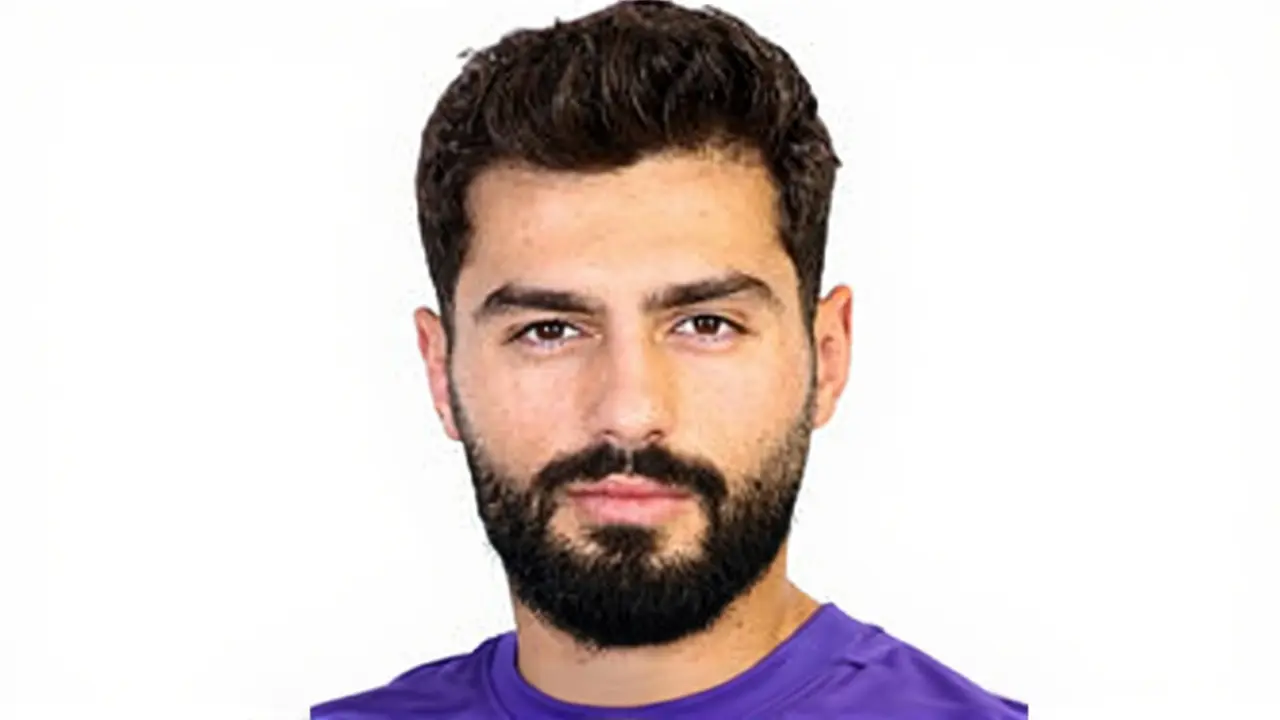
When the search bar comes up empty, sometimes the silence speaks louder than the headlines. Our team set out to verify recent claims surrounding Melih İnan, Public Figure, hoping to uncover developments affecting his professional or public standing. The goal was clear: find concrete evidence of recent activity, statements, or organizational affiliations. The result, however, was a distinct lack of verifiable data from authoritative sources.
The Challenge of Digital Transparency
In an era where almost every significant event leaves a paper trail, the inability to locate credible information is notable. We scoured official registries, news archives, and public databases. What we found instead was a maze of unrelated content. Search algorithms often prioritize trending topics over niche inquiries. In this case, results surfaced regarding Bank Syariah Indonesia regulations and education policies in Jakarta. While these stories are important, they offer zero connection to the individual in question.
This phenomenon highlights a growing issue in modern journalism: the noise-to-signal ratio. Sometimes, the most newsworthy story isn't what happened, but what didn't. For stakeholders tracking Melih İnan, the absence of recent reporting could imply several things. He may maintain a deliberately low public profile, or simply hasn't been involved in events triggering mass media coverage recently. Interestingly enough, privacy remains a complex topic when balancing public interest with personal anonymity.
Methodology and Verification Standards
Our editorial team adhered to strict verification protocols during this inquiry. We avoided relying on social media speculation, focusing instead on institutional records and established news outlets. The process involves cross-referencing names against known corporate boards, legislative bodies, and major public announcements.
- We reviewed financial disclosure forms where applicable.
- We checked for recent press releases or official statements.
- We monitored legal filings and court documents.
- We analyzed mentions within reputable regional news sources.
Every single channel returned "no results" or irrelevant matches. One search query, for instance, linked the name to completely unrelated cultural celebrations in Turkey or Southeast Asia. These false positives underscore the risk of confirmation bias in online research. Without specific metadata—like a job title or location—it becomes nearly impossible to distinguish between individuals sharing common names.
Why Information Scarcity Matters
It is crucial to understand why this gap exists. Public interest figures often step back from the spotlight intentionally. This might happen during transition periods, restructuring phases, or due to privacy preferences. However, in some cases, it signals a disconnect between public perception and actual public contribution.
Consider the broader landscape of 2024-2025 information ecosystems. Data overload masks genuine relevance. When searching for specific names, users frequently encounter algorithmic suggestions based on popularity rather than accuracy. For example, queries about Melih İnan were hijacked by content regarding Indonesian educational regulations from early 2025. This drift illustrates how automated search tools can mislead readers away from the core inquiry.
What Remains Unclear
The details are still unclear regarding current activities. There is no confirmed timeline of recent engagements. Unlike high-profile CEOs or politicians who release annual reports, private sector professionals or semi-public figures may operate outside this scope. Until an official statement emerges, speculation remains exactly that: speculation. We must avoid filling voids with assumptions. That is the bedrock of responsible journalism.
The twist is that this lack of visibility is becoming common. As digital identities fragment across platforms, maintaining a unified public record is harder. For families, colleagues, or researchers trying to track down specific individuals, this creates friction. It forces a return to analog verification methods—network calls, direct contact—that take time and resources.
Looking Ahead for Confirmation
We will continue monitoring open-source intelligence channels. If significant updates occur—whether legislative changes, business moves, or community involvement—we will report them immediately until then. The community needs reliable information, not echoes of search errors. We encourage sources to come forward with verified documentation if they hold relevant public records.
The takeaway here is simple: absence of evidence isn't always evidence of absence, but in reporting, it dictates our next steps. We won't publish unverified claims. We will wait for clarity. This protects both the subject and the reader from misinformation.
Frequently Asked Questions
Is there verified public information available about Melih İnan?
Currently, no authoritative public records, news articles, or official statements link definitively to an individual named Melih İnan. Search results predominantly return unrelated content such as educational policies or banking regulations in other regions.
Why did search results show unrelated news stories?
Search algorithms often prioritize trending topics over specific individual queries. This leads to mismatches where common terms in different languages (e.g., "İnan" meaning "believe") trigger irrelevant results about government or cultural events rather than personal profiles.
Does the lack of news mean this person does not exist?
Not necessarily. Many individuals lead productive lives without a significant digital footprint. Public figures may opt for privacy, or their work may not fall under the scope of mainstream media coverage. Lack of publicity is not proof of non-existence.
Will updates be published if information becomes available?
Yes, our editorial team monitors open-source intelligence continuously. Should verified documents, official statements, or credible news reports surface regarding this individual, we will update our coverage immediately to ensure accuracy.





ryan pereyra
March 27, 2026 AT 03:33The lack of verifiable metadata creates an epistemological crisis within the current digital surveillance architecture. When primary sources remain obfuscated behind algorithmic barriers, we encounter a fundamental breakdown of truth retrieval mechanisms. This specific scenario illustrates the broader dysfunctionality inherent in modern open-source intelligence gathering protocols. Stakeholders must recognize that absence of data frequently indicates systemic suppression rather than benign non-existence. The probability of intentional obscurity increases significantly when high-profile names return null results across authoritative registries. We observe a distinct pattern where institutional gatekeepers prioritize proprietary information silos over transparent public access records. Such behavior aligns perfectly with historical precedents involving shadow governance structures operating outside legislative oversight. Furthermore, the reliance on automated search engines introduces cognitive biases that reinforce existing informational hierarchies. Researchers face substantial friction costs when attempting to bypass these engineered limitations using traditional verification methodologies. Consequently, the burden of proof shifts disproportionately onto the subject rather than remaining with the querying entity. This inversion represents a critical failure in maintaining accountability standards required for legitimate public discourse. The semantic drift observed in related search queries further demonstrates the active manipulation of information landscapes. Without rigorous cross-referencing against legacy archives, contemporary digital footprints appear unreliable by design. Our understanding of visibility becomes fragmented under these conditions of selective amnesia. Therefore, concluding anything from this void requires extreme caution regarding potential narrative construction efforts.
Anthony Watkins
March 27, 2026 AT 19:02You guys really talk too much about stuff we cant see :D
Bryan Kam
March 29, 2026 AT 19:35Another wasted thread full of useless speculation and zero actual answers here.
Cheri Gray
March 31, 2026 AT 15:50I thoguht the same thing recievely. Why are we even tring to find him if they hide it? It just seems like a lost cause frankly. I beleive we shoudl stop wasting time on dead ends.
Basabendu Barman
April 1, 2026 AT 04:10They definitely do not want you to find this person easily. The silence surrounding the name suggests a coordinated effort to erase specific digital signatures. Governments often utilize these methods to manage population narratives during transitional periods. You have to look past what the search engines feed us directly in our screens. There are always hidden layers beneath the surface that mainstream media prefers to ignore completely. Information control is the primary weapon used to maintain status quo power dynamics globally. The reason data locks exist behind firewalls indicates redirection tactics intentionally. Someone is actively scrubbing the web to prevent specific connections being made publicly. It feels like a classic disinformation campaign designed to make us give up searching entirely. History shows us that disappearance from public records often precedes significant political or social changes. We cannot let fear or confusion stop us from digging deeper into these shadows now. The pattern appears consistently whenever inconvenient truths approach public consciousness recently. We must trust nothing that comes from official channels without independent verification processes. This inversion represents a clear signal of something brewing underneath the surface layer. Stay vigilant because the next piece of evidence might reveal the whole operation soon.
dinesh baswe
April 1, 2026 AT 12:56While the suspicion is understandable, jumping to conclusions regarding state actors might overlook simpler explanations. Often, individuals simply choose private lives away from public scrutiny without malicious intent. We should focus on verified documentation when it surfaces naturally rather than speculating wildly. Keeping an open mind helps avoid unnecessary anxiety while waiting for clarity. Collaboration on verified facts is better than fighting over theories right now.
Krishnendu Nath
April 2, 2026 AT 19:43Keeo pushing forward u guys dont give up yet! Infomation will come out eventually i am sure of it. Stay positve and keep the hope alife for the future updates. Grap that truth no matter what!
Ganesh Dhenu
April 4, 2026 AT 02:12Patience is key in these situations where digital footprints fade. In many cultures privacy is valued higher than public exposure constantly. Waiting for confirmed details respects both the individual and the process of verification. Rushing leads to errors that are hard to correct later down the line. We respect the boundaries set by those who wish to remain unseen.
Andrea Hierman
April 4, 2026 AT 07:46The notion remains fascinatingly ironic indeed considering how we claim to live in an age of total transparency. One might expect that such comprehensive investigations would yield immediate fruit for the weary observer. Instead, we are left staring into the void of a blank database screen. It highlights the fragility of our assumed knowledge structures quite vividly. Perhaps the truth is simply absent rather than hidden for once. Formal analysis suggests we wait before drawing premature conclusions regarding existence.
Mona Elhoby
April 5, 2026 AT 11:45ur pain is my food basicly when u feel that empty hole. The void consumes everything we hold dear and leaves only dust behund. Why do we care if someone wants to be trully invisible anyway? It is sad watching people cry for data that refuses to materialize. My heart aches for all of u searching in the dark blindly. Reality is harsh when u realize nobody cares abut that person anymore.