
When Jannik Sinner bowed out of the US Open final to Carlos Alcaraz, it wasn’t just a trophy that slipped away – his 65‑week grip on the world No. 1 ranking vanished too. The loss has sparked a flurry of speculation about what the 23‑year‑old will do differently. Now, fresh off that defeat, Sinner is stepping onto the hard courts of the China Open in Beijing, ready to turn talk into action.
What went wrong in the US Open final?
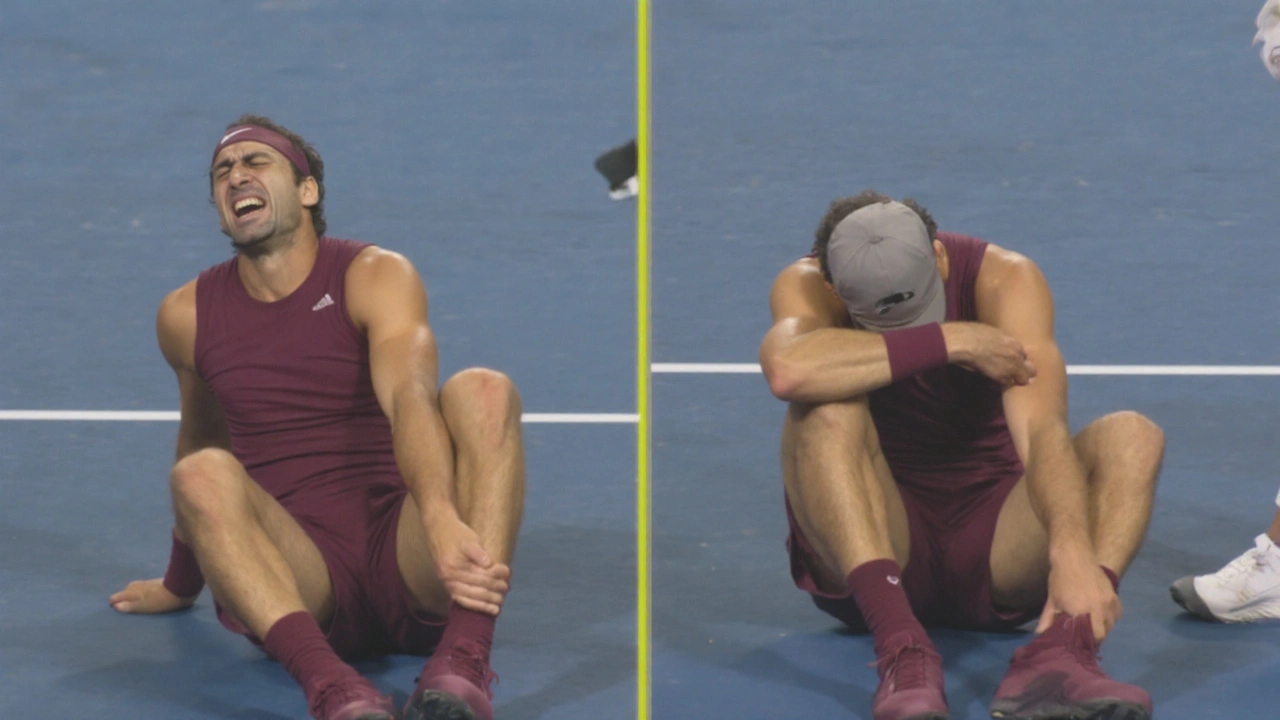
Alcaraz’s aggressive baseline play and willingness to trade blows exposed a few cracks in Sinner’s game. Analysts noted that Sinner’s first‑serve percentages dipped below 55%, and his movement lagged when the Spaniard launched deep, angled shots. The Italian’s usually rock‑solid backhand turned timid on crucial points, and his mental composure slipped during the fourth set tiebreak.
In post‑match interviews, Sinner was candid: he felt “a little too comfortable” with his own rhythm and admitted he hadn’t been experimenting enough with shot selection. He also mentioned a desire to sharpen his transition play – moving from defense to offense quicker – and to add more variety to his serve placement.
The road ahead: Beijing, Shanghai and beyond
The China Open offers Sinner a chance to test new tactics in a high‑stakes environment without the pressure of a Grand Slam. He faces Marin Cilic in the first round – a veteran who can still produce surprise winners. Sinner told the press that he plans to mix up his serve, aiming for more body serves to jam opponents and using the slice backhand more often to disrupt rhythm.
Beyond Beijing, the Italian’s calendar is packed:
- Shanghai Masters – a Masters 1000 event where a deep run could earn valuable ranking points.
- Paris Masters – the final big tournament of the season, often a decisive battleground for the year‑end No. 1 race.
- Turin (ATP 250) – a home‑soil event that gives him a chance to play in front of fans and fine‑tune his grass‑court game ahead of next year.
- Davis Cup – representing Italy, a platform to test his mental resilience in a team setting.
Sinner’s coaching team, led by Riccardo Piatti, has reportedly introduced “small changes” in practice: slightly earlier ball tosses on the serve, a tighter grip on the forehand to generate more spin, and extra conditioning drills to boost endurance in long rallies. The aim isn’t a wholesale overhaul but a series of incremental tweaks that, cumulatively, could give him an edge.
Fans and pundits alike are watching closely. If Sinner can translate these adjustments into wins in Asia, he’ll not only climb the rankings but also send a clear message to Alcaraz: the battle for the top spot isn’t over yet. The next few weeks will reveal whether his “small changes” turn into big results.




Kristen VanPamel
September 26, 2025 AT 02:14In the arena of sport the mind is the quiet architect of victory. Sinner's loss is a mirror that reflects the fleeting nature of certainty. The adjustments he speaks of are not merely technical but philosophical steps toward a new equilibrium.
Reid Vance
October 3, 2025 AT 01:00Listen, the data shows that Sinner's serve percentage slipped because his toss was even a fraction late and that alone can swing a set. He also forgot to vary his spin, a classic mistake we’ve seen since the Federer era. Adding body serves is not genius, it's basic physics applied to tennis, and the Italian knows that deep down.
Javier cox
October 9, 2025 AT 23:40Hey guys, I think Sinner’s gonna bounce back big time. The way he’s planning to mix up his backhand slice is something we see a lot in the European circuit, and it definitely adds some spice. Plus, playing in Beijing will give him a whole new crowd vibe which is always tough but excitng.
Giacinta Pace
October 16, 2025 AT 22:20Wow, this is great news! I’m sure Jannik will feel confident and play his best. Keep the faith, he’s got this.
darryl archer
October 23, 2025 AT 21:00While the sentiment expressed above is commendable, one must consider the underlying tactical deficiencies that plagued Sinner in New York. A superficial optimism does not address the necessity for refined footwork and deliberate serve placement. Hence, a more nuanced analysis is warranted.
Dina DiCicco
October 30, 2025 AT 18:40His upcoming tweak is obvious and inevitable 😎
Kasey DellaPenna
November 6, 2025 AT 17:20Let's go team Sinner, this is the moment to push new limits his training will pay off and the fans will feel the energy the competition will be fierce but he's ready
Gayleen Lowrie
November 13, 2025 AT 16:00What you’re saying hits the mark – focusing on transition from defense to offense is exactly where he can gain momentum. The coaching staff will likely emphasize quick footwork drills to enhance that shift.
Wesley Nakamatsu
November 20, 2025 AT 14:40From an American perspective the pursuit of the No. 1 spot demands a relentless drive; Sinner must adopt a more aggressive mindset akin to the champions who have historically dominated the tour. It is not enough to make minor adjustments – a paradigm shift is essential.
Tyler Tucker
November 27, 2025 AT 13:20Oh the tragedy of a fallen king in a Grand Slam! The arena echoed with sighs the world watched as his crown slipped amid tears the drama is palpable yet the next act will be his redemption
julia mutambara
December 4, 2025 AT 12:00Jannik Sinner’s recent defeat at the US Open may feel like a somber chapter, but it also serves as a powerful catalyst for growth, and the lessons he extracts will shape his future endeavors. In the weeks ahead, the Chinese hard courts present a unique environment that can both challenge and refine his evolving game plan. The shift towards more body serves, as he mentioned, is not merely a technical tweak but an invitation to dominate the point from the get‑go. When his serve lands deeper into the opponent’s torso, it reduces reaction time and forces a defensive posture, which is precisely what he needs against aggressive baseliners. Moreover, the incorporation of a slice backhand can disrupt rhythm and create angles that his rivals may find uncomfortable. His conditioning drills, designed to boost endurance, will be especially useful during long rallies that often decide crucial sets in the latter stages of a match. The mental resilience honed during the Davis Cup will also play a pivotal role, as team dynamics often bring out a heightened sense of responsibility and focus. It is essential to remember that many great champions have rebounded from setbacks stronger than before, and Sinner’s trajectory appears no different. The upcoming match against Marin Cilic, despite Cilic’s veteran status, offers a perfect testing ground for these adjustments. If Sinner can execute his plan with precision, he will not only secure a win but also send a clear message to his competitors. The broader tournament series, including the Shanghai and Paris Masters, will further amplify his opportunities to climb the rankings. Each point he wins will be a building block toward reclaiming the No. 1 position he once held. Fans worldwide are eager to witness this evolution, and the collective energy from supporters can provide an additional boost. In essence, the “small changes” he discussed are the seeds of a larger transformation, and with proper nurturing they will blossom into significant achievements. The road ahead may be demanding, but confidence, dedication, and strategic adaptation will guide Sinner to a triumphant resurgence.
Nelleke Elston
December 11, 2025 AT 10:40Sure, the optimism is nice but let’s not pretend these tweaks magically bring him back to the top; tennis is brutal and many others are improving faster.
Shreyas Badiye
December 18, 2025 AT 09:20Yo fam! I'm super excited about Sinner's game plan 😊 He’s gonna try more body serves and that slice backhand which i think will shock the oppponents 😂 Also the conditioning drills will make him last longer in those marathon rallies 💪 The Beijing crowd is known for being loud and that energy can really pump him up 🌟 Plus, a little cultural exchange always adds spice to the match vibes 🙌
Jocelyn Garcia
December 25, 2025 AT 08:00Focus on the fundamentals and stay aggressive; that’s the winning formula.