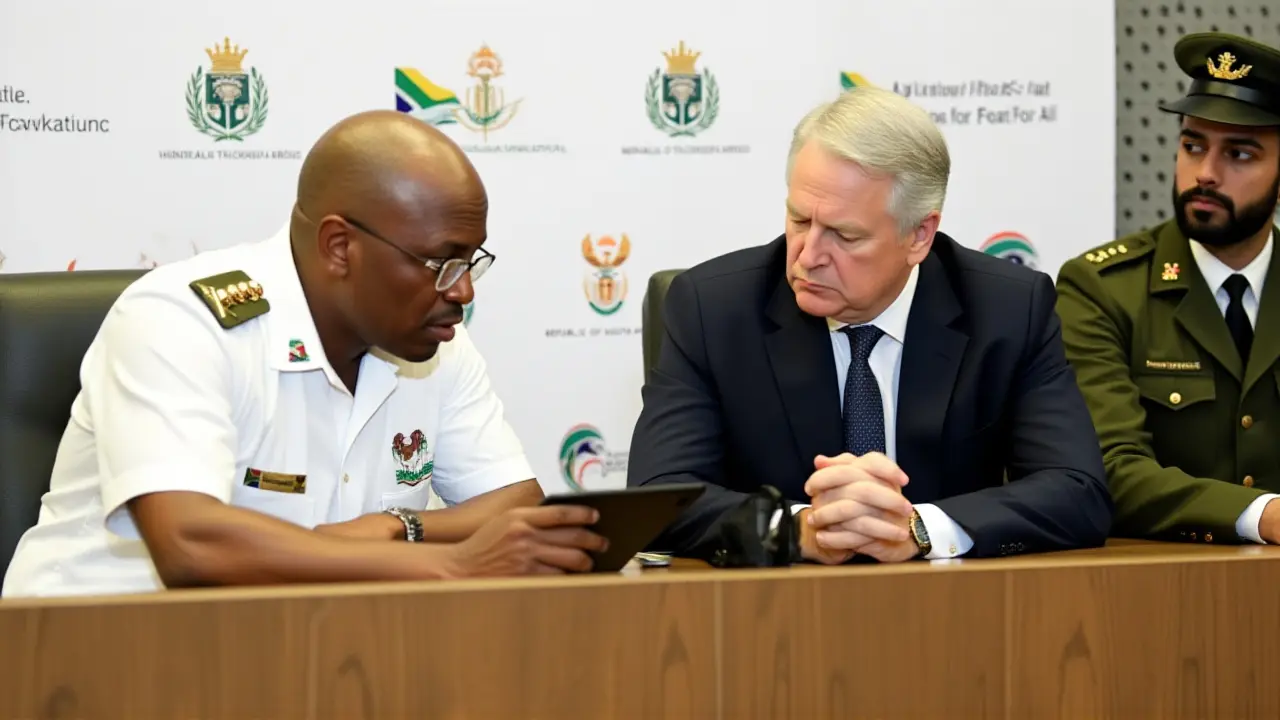
It’s the question on everyone’s lips in Pretoria right now: is the Department of Home Affairs actually fixing things, or is it just a lucky break in a system that’s still broken? On 11 March 2025, the public-interest platform Free SA dropped an analysis piece that caught people off guard. They called the department “one of the few early bright spots” in South Africa’s new political era. That’s bold talk for an agency that used to be synonymous with endless queues and lost passports.
The context here is crucial. We’re living through the so-called Government of National Unity, a trial-run coalition government that many expected to be paralyzed by infighting. Instead, while eyes were glued to the high drama in parliament, Home Affairs quietly started delivering. But wait—before we pop the champagne, let’s look at where this place has been. Because if you remember June 2017, this department was in the spotlight for all the wrong reasons.
From Bribery Scandals to Service Delivery?
Here’s the thing about institutional change: it doesn’t happen overnight. Back in 2017, Leon Schreiber, Minister of Home Affairs, was fighting fires. He publicly warned that his department needed to “urgently embrace technology” or South Africa’s national security would be compromised. It wasn’t just a tech upgrade he was asking for; it was a survival tactic.
At the same time, the department was reeling from internal rot. A senior official, Percy Tshabane, acting chief director of employee engagement, was suspended. The allegations were nasty: he allegedly demanded kickbacks from service providers to approve their invoices. Imagine paying a bribe just to get your company paid for work already done. Schreiber confirmed the suspension on X (formerly Twitter), stating it was pending a “thorough investigation.” It was a dark chapter that defined the department’s reputation for years.
So, how do we get from there to Free SA calling them a “bright spot” in 2025? The shift isn’t magic. It’s likely the result of sustained pressure, leadership changes, and perhaps the sheer necessity of functioning in a coalition government where no one can afford to fail completely. But is it real progress, or just better PR?
The Broader Turnaround Narrative
You can’t look at Home Affairs in isolation. By 14 November 2025, the narrative had expanded. Daily Maverick asked a provocative question: “Has South Africa turned the corner?” Their answer pointed to a cluster of state bodies that once “strangled the economy.”
They listed the usual suspects: Eskom, Transnet, and South African Airways (SAA). And then, surprisingly, they included Home Affairs. The phrase “showing signs” of improvement is careful language. It suggests momentum, not necessarily completion. But when you group Home Affairs with Eskom and Transnet, you’re talking about the backbone of the country’s infrastructure and identity. If these giants are waking up, the ripple effects could be massive.
Oddly enough, this mirrors discussions happening beyond borders. In April 2025, Etienne Maritz, Executive Director of the Ministry of Home Affairs, Immigration, Safety and Security in Namibia, released statements highlighting similar governance challenges. It shows that home affairs issues aren’t unique to South Africa—they’re a regional headache involving border control, immigration, and security. But South Africa’s size makes its struggles—and potential successes—much louder.
Political Implications and Future Outlook
Why does this matter to you? Because efficient home affairs means faster visas for tourists, quicker passport renewals for travelers, and less corruption in government contracts. It’s about trust. When citizens see their IDs processed without bribes, trust in the state begins to rebuild.
There’s also a political angle. A LinkedIn post from 26 March 2026 discussed how “DA-governed administrations” should use crises to highlight “competent governance.” While the authorship of the original Free SA piece remains unclear (with various individuals named Paul Maritz appearing in unrelated contexts), the sentiment aligns with a broader push for clean, effective administration as a political differentiator.
The twist is that we don’t know if this is sustainable. Is Home Affairs a “lone star” shining brightly while the rest of the sky remains dark? Or is it the first glimpse of a new dawn for South African governance? The details are still unfolding. What we do know is that the days of assuming total failure might be over—but only if the current leaders keep their promises.
Frequently Asked Questions
What led to the Department of Home Affairs being called a "bright spot"?
In March 2025, analysts noted unexpected improvements in service delivery and administrative efficiency within the department. This contrasted sharply with its historical reputation for delays and corruption, marking a significant shift during the Government of National Unity period.
Who is Percy Tshabane and why was he suspended?
Percy Tshabane was the acting chief director of employee engagement at Home Affairs. He was suspended in 2017 following allegations that he demanded bribes from service providers in exchange for approving their invoices, a case that highlighted systemic corruption issues at the time.
Are other state-owned entities showing similar improvements?
Yes, by late 2025, reports indicated that Eskom, Transnet, and South African Airways were also showing signs of recovery. Daily Maverick described these entities as previously strangling the economy but now exhibiting positive trends in performance and stability.
What role did technology play in Home Affairs' turnaround?
Minister Leon Schreiber emphasized in 2017 that embracing technology was urgent for national security. Modernizing systems likely reduced human error and opportunities for bribery, contributing to the improved service delivery observed in recent years.
Is the improvement at Home Affairs temporary or permanent?
Experts remain cautious. While current metrics show improvement, the term "lone star" suggests uncertainty. Sustained success depends on continued political will, funding, and adherence to anti-corruption measures across the broader Government of National Unity.



Abhijit Pawar
July 3, 2026 AT 23:15Stop pretending this is a miracle. It’s basic administrative cleanup after years of rot.
lavanya tolati
July 4, 2026 AT 06:06i remember standing in those queues for hours just to get an ID checked and the staff would look at you like you were asking for gold it was so dehumanizing honestly
srinivasan sridharan
July 4, 2026 AT 13:18How delightful that we are now celebrating mediocrity as excellence. The bar was set so low that merely clearing it feels like an Olympic victory for the South African state apparatus.
Anant Kamat
July 6, 2026 AT 07:14I mean, if they can fix Home Affairs maybe Eskom will actually start working properly too but I’m not holding my breath because history shows these things tend to swing back
Indrani Dhar
July 7, 2026 AT 18:36it’s all a facade really, the deep state knows exactly what they’re doing by letting one department shine while the others burn, it’s classic distraction technique, don’t fall for it, they want you docile and grateful for crumbs when you deserve the whole loaf, i see the strings being pulled from behind the curtains, it’s terrifying how predictable this narrative is, trust no one, especially not the ones smiling on TV, they are feeding you lies wrapped in bureaucratic efficiency, wake up people
Raja Meena
July 9, 2026 AT 03:20We should be ashamed that we consider basic service delivery as a 'bright spot' instead of a fundamental right that was stolen from us through negligence and greed.
Pooja Kiran
July 9, 2026 AT 19:39The systemic inertia within the Department of Home Affairs has been historically entrenched due to legacy infrastructure deficits and human capital flight, yet the recent KPI improvements suggest a localized optimization rather than holistic institutional reform, which is statistically significant but practically negligible in the grand scheme of national governance metrics.
Mukesh Katira
July 11, 2026 AT 18:17It is funny how morality shifts with political convenience. Yesterday they were thieves, today they are heroes. There is no virtue in returning what was never yours to take in the first place, only the cessation of crime.
Roop Kaur
July 13, 2026 AT 00:56the matrix of bureaucracy is collapsing under its own weight and this is just a glitch in the simulation, think about it, why would they fix it now unless they needed your compliance for the next phase of control, it’s not about passports it’s about tracking every movement, scary stuff right?
Ankita Bajaj
July 14, 2026 AT 07:26Let’s give them some credit! If they can turn this around, imagine what else is possible. We need more of this energy across all departments!
Manish gupta
July 14, 2026 AT 22:10Please. You people are easily amused. A functioning passport office isn't a breakthrough, it's the bare minimum requirement for a civilized society. Don't act like you've discovered fire because someone finally lit a match.
Sanjay Kumar
July 16, 2026 AT 17:22Change is hard but it starts somewhere. If Home Affairs can prove that competence is rewarded, maybe other ministries will follow suit. Let's support this progress rather than tearing it down before it even gets started.
Gaurav Jangid
July 18, 2026 AT 11:57Ugh!! Why does everyone have to be so negative?? 😡 It’s great news!!! Finally something good is happening!!! Stop dragging it down!!! 🙄😤
Ghanshyam Gohel
July 19, 2026 AT 04:19While I appreciate the sentiment, one must critically evaluate the sustainability of these reforms without falling into the trap of premature celebration, as historical data suggests cyclical patterns of improvement followed by regression in such institutions.
Nathan Lemon
July 21, 2026 AT 02:06It is imperative to recognize that administrative efficiency serves as the bedrock of societal stability, and thus, any positive developments in this sector should be noted with academic rigor rather than populist enthusiasm.
Jay Patel
July 21, 2026 AT 22:15You fools still haven't realized that this is a test of your obedience. The elites are watching to see if you'll cheer for minor concessions. Do not be sheep. Stay angry. Stay awake. 🧠👀
Pranav Gopal
July 22, 2026 AT 16:23We need to look at the structural changes that allowed this to happen. Was it technology? Leadership? Or just pressure from the coalition? Understanding the mechanism is key to replicating it elsewhere.